Difficulty Passing Stool But Not Constipated Pelvic Floor
- 1.
When Your Guts Play Hard to Get
- 2.
What Exactly Is “Not Constipated But Still Stuck”?
- 3.
The Phantom Strain: Meet Pelvic Floor Dysfunction
- 4.
Tenesmus: That “Gotta Go” Lie Your Body Tells
- 5.
Is It a Lazy Bowel or Just Lazy Communication?
- 6.
Why You Can *Feel* It But Can’t Push It Out
- 7.
Things That Whisper (or Scream) “Check Your Pelvic Floor”
- 8.
Food, Water, and Fiber: Not Always the Fix
- 9.
When Stress, Trauma, or Past Injuries Mess With Your Move
- 10.
Where to Go From Here (Without Feelin’ Like a Weirdo)
Table of Contents
difficulty passing stool but not constipated
When Your Guts Play Hard to Get
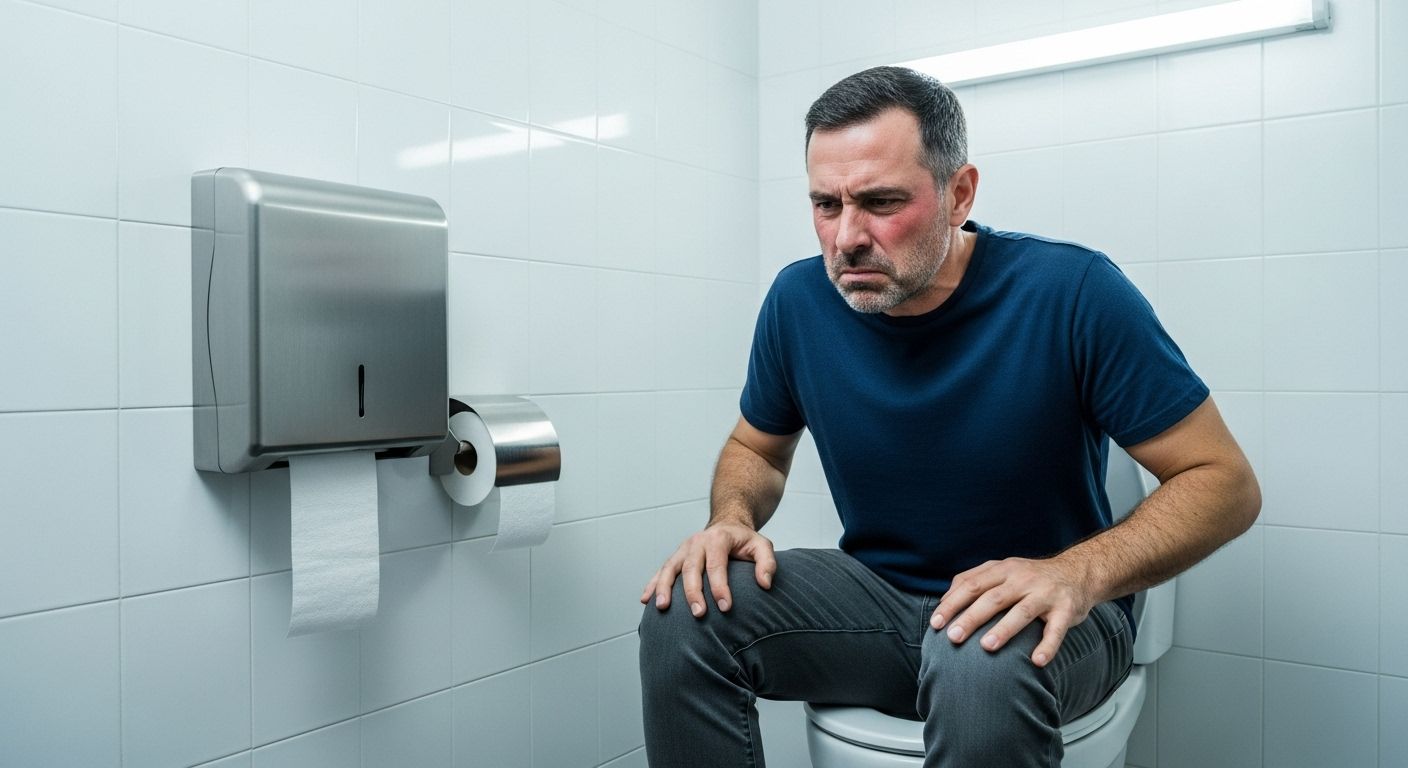
Ever felt like your body’s throwin’ a rave, but your bowels are just standin’ awkwardly by the snack table? Yeah, we’ve all been there—staring down the porcelain throne like it’s your ex who ghosted you. You’re not technically constipated—no rock-hard logs, no goin’ a week without a visit—but still, you’re sittin’ there pushin’ like you’re tryna bench press your soul outta your butt. That’s the wild paradox of difficulty passing stool but not constipated. It’s like your intestines got the memo that it’s time to go, but your pelvic floor missed the memo entirely. Confusin’, right? Let’s unpack this messy little mystery together, y’all.
What Exactly Is “Not Constipated But Still Stuck”?
Medically speakin’, constipation usually means fewer than three bowel movements a week, hard or lumpy stools, or intense straining. But difficulty passing stool but not constipated flips that script—your stool’s soft, maybe even normal, but somethin’s blockin’ the exit. Think of it like traffic: your car’s runnin’ fine, but there’s a detour at the on-ramp to Freedom Highway. This ain’t about stool consistency; it’s about function. And folks, that’s where things get real interesting.
The Phantom Strain: Meet Pelvic Floor Dysfunction
Imagine your pelvic floor muscles as a bouncer at a club. When it’s workin’ right, it lets folks in *and* out smoothly. But if those muscles are hyped-up, tense, or just plain confused? They’ll lock the door even when the party’s over. That’s pelvic floor dysfunction—a sneaky culprit behind difficulty passing stool but not constipated. You feel the urge, maybe even sit for 20 minutes grunting like you’re auditionin’ for a lumberjack reality show, but nothin’ happens. Or worse—part of your stool comes out, and the rest just… stays. It’s like your body’s playin’ keep-away with itself.
Tenesmus: That “Gotta Go” Lie Your Body Tells
Ever get that urgent, can’t-wait-a-second feeling like you’re about to explode… only to sit down and produce a sad, tiny nugget, then still feel full? That’s tenesmus, baby. And it’s a classic symptom of difficulty passing stool but not constipated. Your rectum’s sendin’ SOS flares like it’s crammed with cargo, but the truth might be inflammation, nerve misfires, or just muscle miscommunication. It feels like pressure, cramping, or that weird “unfinished business” vibe after you wipe. Honestly? It’s your gut gaslightin’ you—and it’s exhaustin’.
Is It a Lazy Bowel or Just Lazy Communication?
Sometimes folks say “lazy bowel,” but that phrase is kinda misleading. Your colon ain’t lazy—it’s just not gettin’ the right signals. Conditions like slow transit constipation involve actual motility delays, but with difficulty passing stool but not constipated, the speed’s fine—it’s the coordination that’s off. Like a drummer playin’ perfect tempo while the rest of the band’s jammin’ in 7/8 time. You might still have daily BMs, but they feel incomplete, strained, or unsatisfying. And that? That’s your clue somethin’ deeper’s brewin’.
Why You Can *Feel* It But Can’t Push It Out
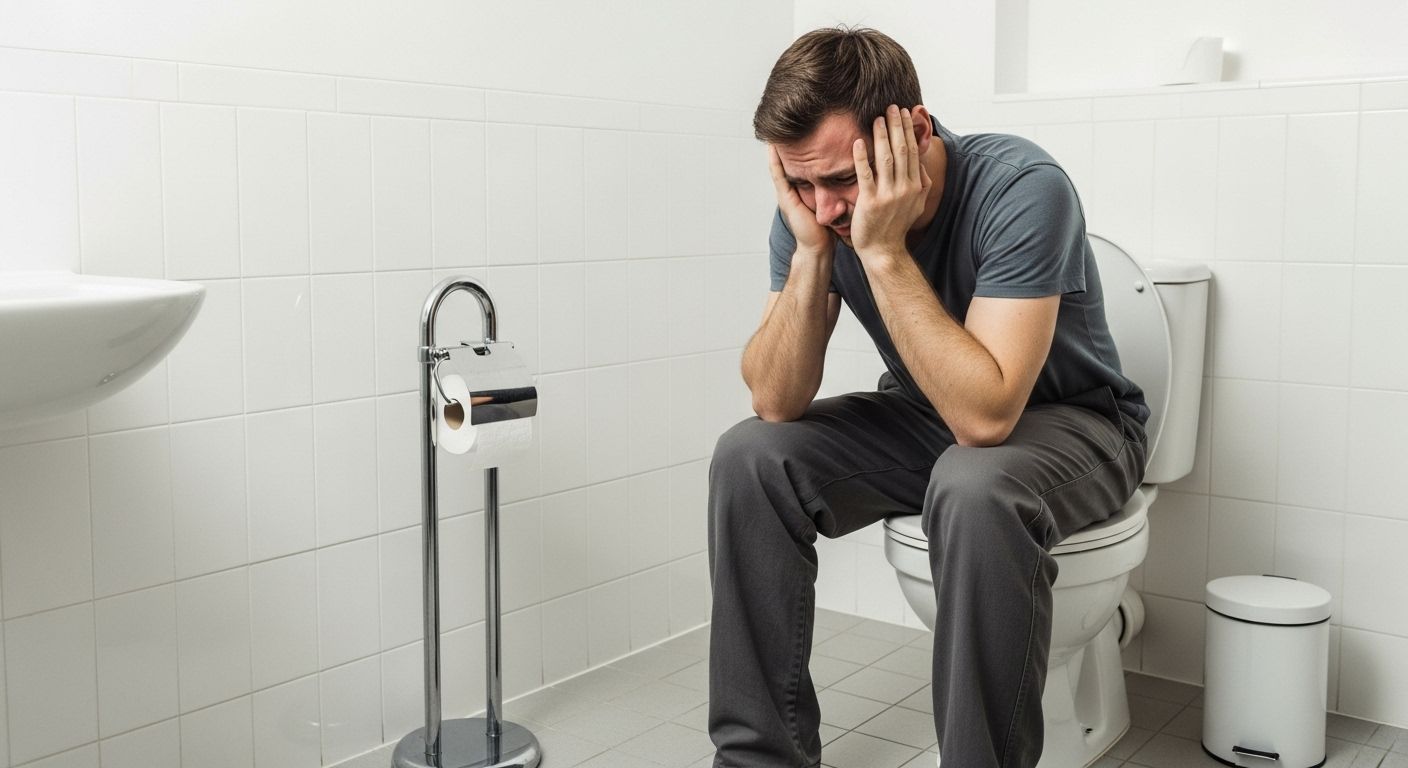
You know that frustrating sensation when you can *feel* the stool right there—like it’s knockin’ on the back door—but no amount of bear-down gruntin’ gets it across the threshold? That’s often a sign of dyssynergic defecation, a fancy term for “your butt muscles ain’t playin’ nice.” Instead of relaxin’ to let stuff out, they clench tighter. Irony? It’s brutal. And it’s a hallmark of difficulty passing stool but not constipated. Biofeedback therapy’s actually super effective here—teaches your muscles to stop bein’ overachievers at the worst possible time.
Things That Whisper (or Scream) “Check Your Pelvic Floor”
Besides straining without results, keep an eye out for these red flags:
- Feeling of blockage in the rectum
- Needin’ to use fingers to help stool out (yep, diggin’ around down there)
- Frequent false urges
- Sensation of incomplete evacuation
- Soft or normal stools that still won’t budge
If these ring a bell, congrats—you might be dancin’ with pelvic floor dysfunction. And while it sounds scary, it’s treatable. Like, really treatable. Don’t just chalk it up to “weird digestion” and suffer in silence.
Food, Water, and Fiber: Not Always the Fix
“Just eat more prunes!” they say. “Drink eight glasses!” they cheer. Listen—while hydration and fiber are MVPs for gut health, if you’re dealin’ with difficulty passing stool but not constipated, more fiber might actually make it worse. Why? Because if your pelvic floor won’t relax, extra bulk just adds pressure without an exit strategy. It’s like packin’ more people into an elevator that’s stuck between floors. So before you blitz your smoothie with 30g of psyllium, maybe check in with a doc who gets functional GI disorders. Sometimes less is more—and strategy beats volume.
When Stress, Trauma, or Past Injuries Mess With Your Move
Your gut’s wired straight to your brain—that’s the gut-brain axis for ya. Stress, anxiety, even old injuries (like childbirth trauma or pelvic surgery) can leave your pelvic floor muscles stuck in “defense mode.” They guard. They tighten. They *refuse* to let go. And that tension? It directly contributes to difficulty passing stool but not constipated. Healing isn’t just about diet—it’s about nervous system regulation, somatic awareness, maybe even pelvic physical therapy. Your body’s rememberin’ old battles, even if your mind’s moved on.
Where to Go From Here (Without Feelin’ Like a Weirdo)
First off: you’re not broken. Second: this is more common than TikTok makes it seem. If you’re stuck in this limbo of difficulty passing stool but not constipated, reach out to a gastroenterologist who specializes in motility or pelvic floor disorders. Don’t settle for “just take Miralax”—that’s like puttin’ a band-aid on a Wi-Fi signal. For real support, swing by the Dr Jay Stone homepage for trusted health insights, dive into the Health category for more gut talk, or check out our deep dive on related symptoms in Constipated But Passing Gas Trapped Wind Relief. Knowledge is power—and relief is possible.
Frequently Asked Questions
Why is it hard to poop but I'm not constipated?
This often points to pelvic floor dysfunction or dyssynergic defecation, where your rectal muscles don’t coordinate properly during a bowel movement—even if your stool is soft and regular. So while you’re not constipated by clinical definition, you still experience difficulty passing stool but not constipated due to muscular miscommunication, not stool hardness.
What are the symptoms of a lazy bowel?
“Lazy bowel” isn’t a medical term, but it’s often used to describe slow colonic transit. However, if you have regular soft stools yet still struggle, it’s likely not true slow transit. Instead, symptoms like straining, feeling of blockage, or incomplete evacuation despite normal stool consistency suggest difficulty passing stool but not constipated due to pelvic floor issues, not colon laziness.
Why can I feel my poop but can't push it out?
You can feel it because it’s physically present in your rectum—but if your pelvic floor muscles won’t relax (or even tighten further when you push), it creates a functional blockage. This mismatch is a classic sign of difficulty passing stool but not constipated, often linked to chronic straining or nerve-muscle signaling errors.
What does tenesmus feel like?
Tenesmus feels like a persistent, urgent need to poop—even after you’ve gone. You might feel crampy pressure, a “full” rectum, or like you didn’t finish the job. It’s often mistaken for constipation, but with difficulty passing stool but not constipated, the stool may be soft while the sensation lingers due to inflammation or neuromuscular confusion.
References
- https://www.mayoclinic.org/diseases-conditions/constipation/symptoms-causes/syc-20354253
- https://www.ncbi.nlm.nih.gov/books/NBK557575/
- https://www.gastro.org/practice-guidance/gi-patient-center/topic/pelvic-floor-dysfunction
- https://www.niddk.nih.gov/health-information/digestive-diseases/constipation